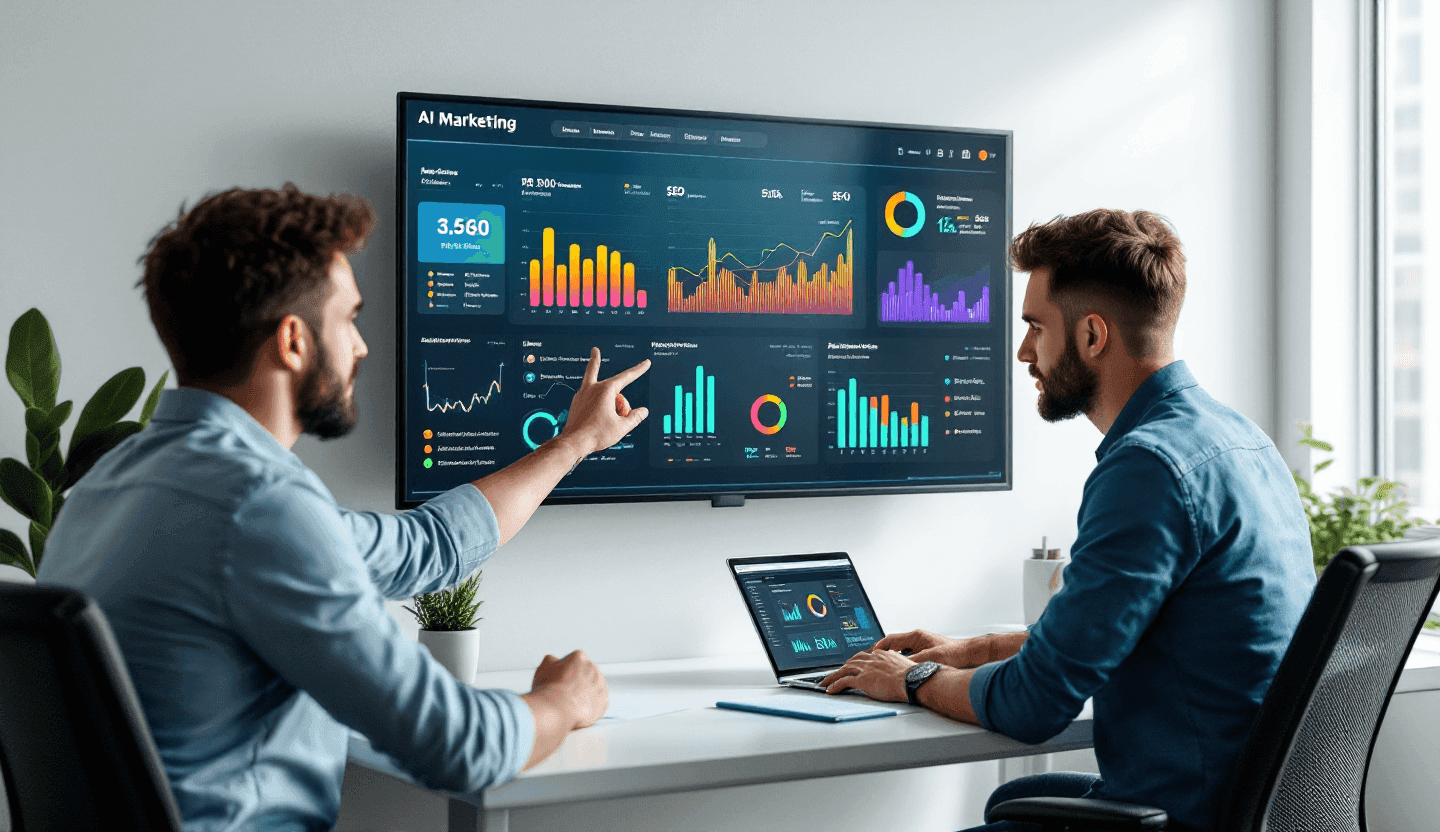
marketing
How Marketing and Automation Work Together for Scalable Growth
When people ask how marketing and automation work together, they’re usually chasing one thing: growth without chaos. The answer isn’t just “faster emails” or “better workflows.” It’s the convergence of an integrated system that replaces a pile of disconnected tools, gives you a unified view of your audience, and turns data into timely, relevant actions across every channel.
In personal finance—where product details change often and decisions carry real stakes—this matters even more. Whether you’re promoting credit cards, comparing car insurance, or helping users evaluate personal loans, smart automation keeps you timely, consistent, and cost-efficient while uncovering the insights that actually move revenue.
Why marketing and automation belong together now
Marketing and automation have always been linked, but the stakes are different today. Audiences expect clear, personalized guidance; teams need to do more with less; and every campaign must prove its impact on the bottom line. Automation enables scale, yet scale without context can feel cold and generic. The goal is the opposite: automation that amplifies relevance.
That means moving past fragmented workflows and toward a connected system. When your email, paid media, content, and analytics run from the same source of truth, every touchpoint reflects what the user just did, what they care about, and what they’re likely to do next. That’s where growth compounds. This is the essence of Marketing Automation that truly works as one system.
What “integrated” really means
Integration isn’t a checklist of API connections. It’s a marketing automation platform that unifies data, content, and delivery so your campaigns don’t break at the seams. In practice, that looks like a single profile for each visitor and customer, consistent tracking and attribution, and triggers that work the same way across email, SMS, on-site personalization, and ads.
Take a common scenario: a visitor compares cash-back credit cards, views two issuer pages, and then browses auto insurance. In an integrated setup, this behavior updates a unified profile in real time, suppresses irrelevant messages, and activates next-best offers with the right disclosures. The user experiences an intentional path, not a stream of disconnected nudges.
Why consolidation beats a crowded tool stack
Most articles mention efficiency and cross-channel coordination. In real marketing teams, the pressing issue is tool sprawl. Every point solution—email, social scheduling, site pop-ups, basic analytics—adds another login and another dataset to reconcile. The result is reporting gaps, inconsistent naming, and campaigns that take too long to launch.
Consolidation flips that dynamic. One platform handles most core functions, layered with a short list of specialized tools where they truly add value. You reduce vendor costs, simplify governance, and boost data quality. More importantly, insights show up faster. When creative, content, and audiences live near the same data, iteration becomes routine rather than a quarterly event.
The automations that actually move the needle
In personal finance, growth depends on matching intent to the right product at the right moment. Automations that do this well have a few things in common: they’re data-driven, channel-agnostic, and measurable. If you’re deciding how to automate marketing processes, start with essentials and expand from there.
- Lifecycle orchestration that follows a user from top-of-funnel education to product comparison to application—adjusting offers as intent signals change.
- Predictive audiences that rank users by likelihood to convert on specific products, such as 0% APR credit cards or low-mileage car insurance plans.
- On-site personalization that updates modules and disclosures based on the product category a user last engaged with.
- Ad audience sync and suppression that stops spending on users who already converted or are in an active nurture.
- Lead enrichment and routing to partners or issuers, with alerts when a high-intent visitor returns.
- SEO-to-content workflows that spin up targeted landing pages and social posts around emerging topics, then tie those pages to campaigns. This aligns closely with SEO and Content Marketing: Proven Strategies for Organic Growth.
- Automated reporting that rolls channel performance into a single source of truth—no more spreadsheet marathons.
Each of these frees your team from manual busywork and tightens the connection between intent and action. Over time, the compounding effect is a lower CPA, higher conversion rates, and better user experiences.
How AI elevates marketing automation
AI makes automation smarter by adding context, creativity, and prediction. This is where marketing automation tools move beyond “if-this-then-that” rules and into dynamic decisions based on user behavior and market signals. Two capabilities stand out.
First, AI-driven personalization. Models can choose which offer or message to show based on similar user journeys, not just simple segments. A visitor reading about balance transfers receives content tailored to that need, while someone researching roadside coverage sees car insurance comparisons first. The system learns and adapts without manual reconfiguration.
Second, predictive analytics. Instead of emailing every subscriber about every product, you prioritize those with the highest probability to act and sequence campaigns accordingly. Predictive lead scoring and “next best action” models allocate spend where it’s likely to matter, trimming wasted impressions and email fatigue.
Content is the other half of the picture. Tools like MagicTraffic use search data to analyze keywords, uncover intent clusters, and generate content for websites and social media optimized for targeted keywords. Connect that to your marketing automation platform, and you can route MagicTraffic’s SEO-driven articles and posts into appropriate segments, automatically build topic clusters (e.g., “cash-back vs. points credit cards”), and trigger nurture sequences from new content launches. The workflow turns organic insights into multi-channel campaigns with minimal manual lift. Learn more about these capabilities in Marketing Automation: How to Streamline Campaigns and Maximize ROI.
Choosing marketing automation platforms with consolidation in mind
If you’re evaluating the best marketing automation tools for growth, center your criteria on consolidation and data integrity. Nice-to-have features matter far less than a platform’s ability to become your operational backbone.
Look for a data model that supports identity resolution across anonymous and known users, with clean handling of consent and privacy. Check for native integrations with your CRM, ad platforms, and analytics—not just raw connectors, but well-maintained, bidirectional syncs that keep naming conventions and UTMs intact. Ask how the platform manages channel orchestration, especially around suppressions and frequency caps across email, SMS, and ads.
Extensibility also matters. Can you bring in predictive models or plug in AI content tools like MagicTraffic? Will the system handle standardized taxonomies for product categories, issuers, and campaign tags? And does the pricing align with your growth path—usage-based where it makes sense, without penalizing you for running more experiments?
Finally, insist on transparent reporting that maps automations to outcomes. If you can’t trace how a workflow impacted applications, pre-qualifications, or partner referrals, you’re guessing rather than optimizing. This comprehensive approach is what a mature marketing automation platform should empower.
A practical path to integration
Big transformations stall when they try to solve everything at once. A focused, staged approach delivers momentum and proof.
- First 30 days: Audit your stack, map key journeys for one product line (say, credit cards), and standardize tracking—UTMs, event names, and product taxonomies. Connect core data sources to your marketing automation software and confirm identity resolution works.
- Days 31–60: Launch two high-impact automations: lifecycle orchestration for the chosen product and ad suppression for converters. Integrate your content engine—e.g., have MagicTraffic publish SEO-optimized articles around priority keywords and feed those topics into segment logic.
- Days 61–90: Add predictive audiences and on-site personalization. Consolidate redundant tools, and move reporting into a single dashboard that shows assisted conversions, CPA, time-to-launch, and data completeness.
By month three, the new system should be measurably better than the old one: faster launches, clearer attribution, and fewer manual hops between tools.
Measurement that keeps you honest
Automation should improve both efficiency and outcomes, so track both. Operational metrics like campaign time-to-launch, data reconciliation time, and the number of tools used per campaign show whether consolidation is working. Commercial metrics—conversion rates by product, cost per approved application, paid media waste reduction via suppression, and incremental lift from personalization—prove the approach is paying off.
A simple rule helps: what you automate, you must instrument. Each workflow should declare its intended impact upfront and ship with a control or baseline whenever feasible. That discipline builds a library of “wins” and guards against automating noise.
From busywork to growth
Marketing and automation create outsized impact when they work as one system, not as scattered tools. For financial product marketers, that means fewer moving parts, cleaner data, and AI that turns intent into action across channels. Consolidation isn’t just about saving money on subscriptions; it’s about sharper insights, faster iteration, and experiences that help people make better decisions.
Start with an integrated backbone, bring AI into the moments that matter, and let content and campaigns feed each other. Whether you’re scaling credit card comparisons or expanding into car insurance and personal loans, the path to growth is the same: one platform, shared data, and automation that feels personal—not mechanical. Tools like MagicTraffic can power the SEO and content side; your marketing automation platform turns that momentum into predictable, measurable results.